
Control Joints vs. Isolation Joints: Understanding the Lines in Your Concrete
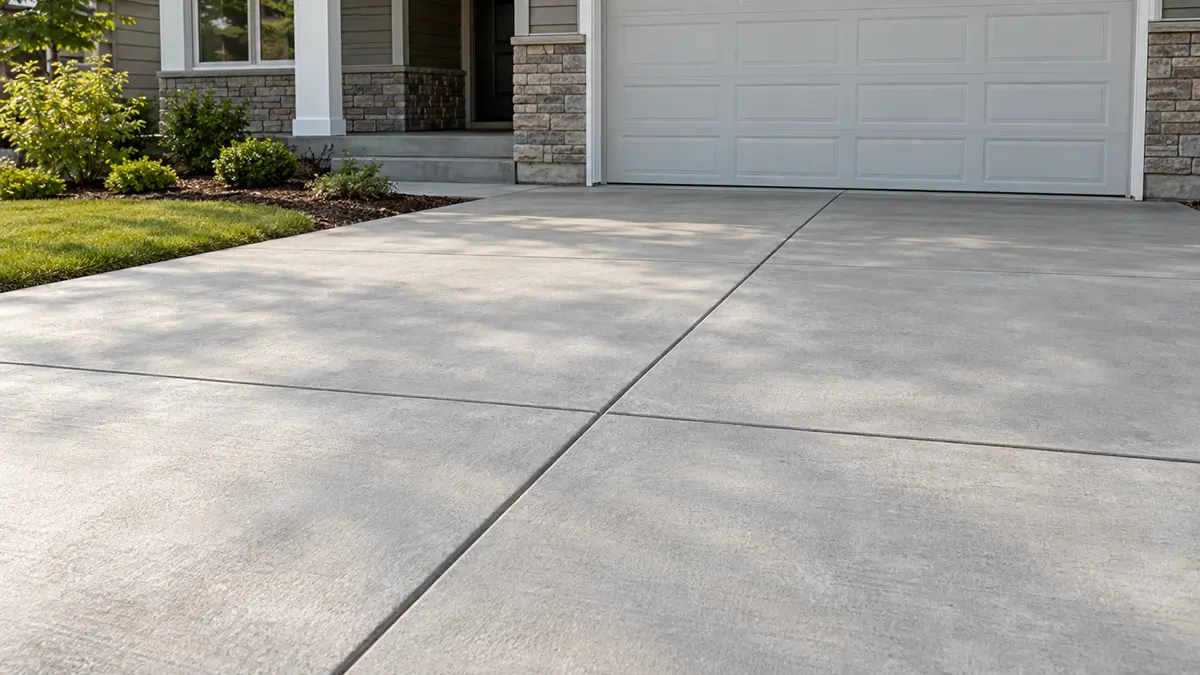
Have you ever looked at a freshly poured driveway or patio and wondered why someone deliberately cut straight lines across that smooth, beautiful surface? You’re not alone. Those lines confuse a lot of homeowners, and some people even worry they’re a sign that something went wrong. The good news is that those lines are there for a very good reason. In this post, we’ll walk through concrete control joints vs isolation joints, explain what those lines actually do, and help you tell the difference between intentional joints and the cracks you don’t want to see.
Why Concrete Needs Joints in the First Place
Concrete is incredibly strong, but it isn’t flexible. As it cures, it shrinks slightly as water leaves the mix. After that, it keeps moving for its entire life. It expands in summer heat, contracts in winter cold, and shifts slightly as the ground beneath it settles or freezes and thaws.
All that movement creates stress, and when the stress has nowhere to go, the concrete relieves it the only way it can: by cracking. Experienced concrete contractors know that cracking is a natural behavior of concrete. Rather than pretend it won’t happen, we plan for it. That’s where joints come in.
Joints give concrete a controlled way to move and crack, so the slab stays functional and looks neat for years to come. There are two main types you’ll find in residential concrete joints: control joints and isolation joints. Each one has its own job.
What Are Control Joints?
Control joints, sometimes called contraction joints, are the straight lines you most often see running across driveways, sidewalks, and patios. They’re grooves that create an intentional weak spot in the slab.
Here’s the clever part. Since concrete is going to crack somewhere, a control joint tells it where. When the slab shrinks or moves, the crack forms neatly along the bottom of the groove instead of zigzagging randomly across the surface. Because the crack happens below the visible surface of the joint, you often can’t even see it.
How Control Joints Are Made
Control joints are usually created in one of two ways:
- Tooled joints: While the concrete is still fresh, a finisher uses a grooving tool to press a line into the surface. These joints typically have slightly rounded edges.
- Saw-cut joints: After the concrete has hardened enough to support a saw but before it has had a chance to crack on its own, a concrete saw cuts a straight, clean line into the slab. Timing matters here, since cutting too late can mean the slab has already started cracking.
Depth and Spacing Matter
For a control joint to do its job, it needs to be deep enough. A common rule of thumb in the industry is that the joint should be cut to about one-quarter of the slab’s thickness. A shallow joint may look fine, but the concrete can simply crack beside it instead of through it.
Spacing is just as important. Joints that are too far apart leave large sections of concrete with too much built-up stress. A general guideline is to space joints (in feet) at roughly two to three times the slab thickness (in inches). So a 4-inch slab would typically have joints about 8 to 12 feet apart. Contractors also try to keep the sections close to square, since long, skinny panels are more prone to cracking.
What Are Isolation Joints?
Isolation joints, sometimes called expansion joints, serve a different purpose. Instead of guiding cracks within a slab, they separate the concrete from other structures it touches, allowing each to move independently.
Think about where a driveway meets your garage floor, or where a patio butts up against your home’s foundation. Those structures move differently. Your house sits on a deep foundation, while a driveway rests on the ground near the surface. If the two are locked together, movement in one can stress and crack the other.
Where You’ll Find Isolation Joints
Isolation joints are commonly placed:
- Between a driveway and the garage slab
- Where a patio or walkway meets the house foundation
- Around columns, posts, or poles set in concrete
- Where a new slab meets an existing sidewalk or slab
- Around drains and other fixed objects
What They Look Like
Unlike control joints, isolation joints go through the full depth of the slab. They’re usually filled with a flexible material, such as a fiber board or foam strip, that cushions movement. You might notice a dark strip or a slightly wider gap where your driveway meets the street or the garage. That’s an isolation joint doing its job.
Concrete Control Joints vs Isolation Joints: A Quick Comparison
If you’re still sorting out the difference, here’s a simple breakdown:
- Purpose: Control joints guide cracking within a slab. Isolation joints separate a slab from other structures.
- Depth: Control joints go partway into the slab, usually about one-quarter of the thickness. Isolation joints go all the way through.
- Location: Control joints are spaced across the middle of the slab in a grid pattern. Isolation joints sit at the edges, where the concrete meets something else.
- Appearance: Control joints look like thin grooves or saw cuts. Isolation joints usually have a visible filler strip.
Both types work together to keep your concrete looking good and performing well.
Lines in Concrete Driveway Surfaces: Joints vs. Cracks
Now for the question most homeowners really care about: how do you tell whether the lines in your concrete driveway are planned joints or problem cracks? Understanding concrete joints vs cracks can save you a lot of worry.
Signs It’s a Joint
- The line is perfectly straight.
- It runs in a consistent pattern, often dividing the slab into even sections.
- It has clean, smooth, or slightly rounded edges.
- It contains a flexible filler strip, especially at edges.
Signs It’s a Crack
- The line wanders, zigzags, or branches out.
- It has rough, jagged edges.
- It appears randomly in the middle of a section, away from any joint.
- One side sits higher than the other, creating a trip hazard.
- It keeps getting wider over time.
Keep in mind that a hairline crack running neatly along the bottom of a control joint is exactly what’s supposed to happen. That’s the joint working as designed. Random cracks between joints, on the other hand, can be a sign that joints were spaced too far apart, cut too shallow, or cut too late. They can also point to issues with the base underneath.
Caring for Your Concrete Joints
Joints don’t require much attention, but a little care goes a long way:
- Keep them clear. Pull out weeds and sweep away debris that collects in joints.
- Consider sealing joints. A flexible joint sealant can help keep water out, which is especially helpful in areas with freeze-thaw cycles.
- Watch isolation joint fillers. Over time, filler material can deteriorate. Replacing it helps keep water from getting under the slab.
- Seal the surface. A quality concrete sealer helps protect the whole slab, joints included, from moisture and wear.
- Keep an eye out for changes. If you notice new cracks forming or slabs shifting, it’s worth having a professional take a look.
Why Proper Joint Planning Starts Before the Pour
The best time to think about joints is before the concrete ever arrives. Good joint layout considers the size and shape of the slab, its thickness, where it meets other structures, and even where corners and curves might concentrate stress. When joints are planned thoughtfully, they not only help manage cracking but can also look clean and intentional, adding to the overall finished appearance of your project.
That’s one of the reasons working with an experienced concrete contractor matters. Joints are a small detail that can make a big difference in how your driveway, patio, or walkway holds up over time.
Final Thoughts
Those lines in your concrete aren’t mistakes. They’re a smart, deliberate part of the design. Control joints guide the natural cracking of concrete into neat, hidden lines, while isolation joints give your slab room to move separately from your home and other structures. Knowing the difference between concrete control joints vs isolation joints, and between joints and true cracks, helps you understand your concrete better and spot potential issues early.
If you’re planning a new driveway, patio, or walkway, or you have questions about the joints and cracks in your existing concrete, the team at JBJ Concrete LLC is here to help. Contact us today to talk about your project and get the answers you need.