
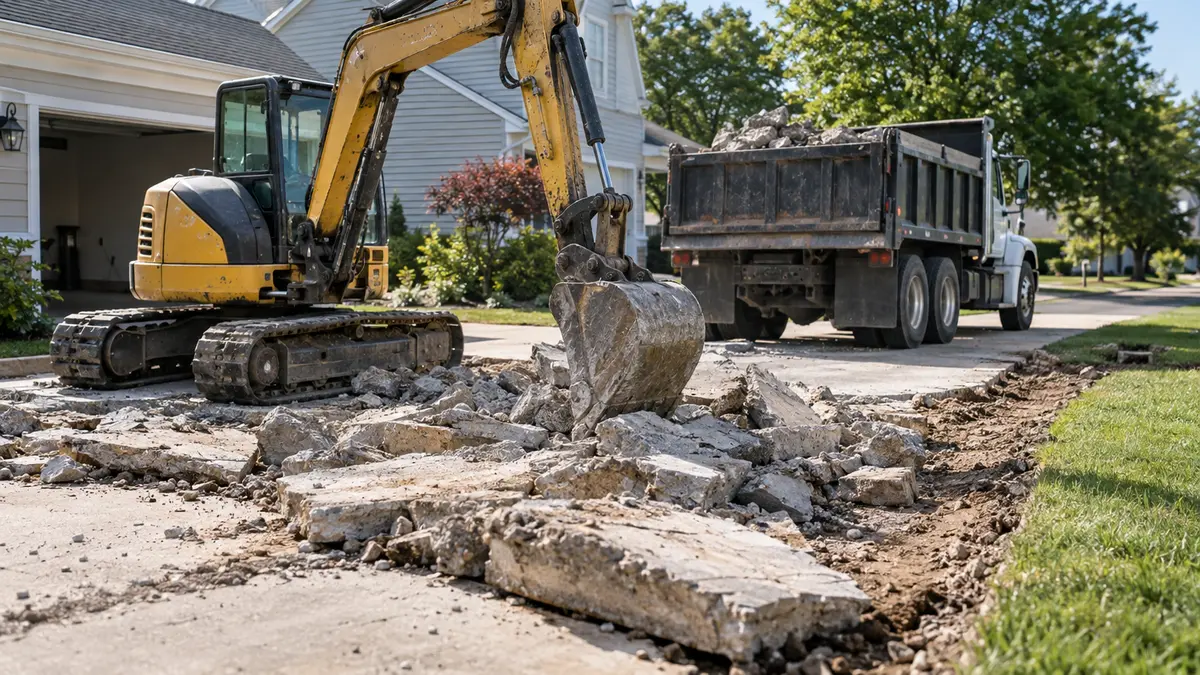
Driveway Demolition Day: Planning Vehicle Access, Deliveries, and Debris Removal
The day your old driveway gets torn out is a big one. It’s loud, a little dusty, and it’s when the real transformation starts. It’s also the day homeowners are most likely to find themselves asking, “Wait, where am I supposed to park?” or “Is the delivery truck going to make it up the street?” With some planning, demolition day can go smoothly for you, your family, your neighbors, and the crew. In this guide, the team at JBJ Concrete LLC walks through practical driveway demolition preparation tips so you know what to expect and how to get ready.
Why Planning Ahead Makes Demolition Day Easier
Removing a concrete driveway takes heavy equipment, trucks for hauling, and enough open space for everyone to work safely. If cars are blocked in, packages are piling up where equipment needs to go, or a neighbor’s trash cans are sitting in the path of a dump truck, things can slow down quickly. A little preparation helps you avoid:
- Getting your car stuck in the garage or behind the work zone
- Missed or misdelivered packages
- Frustrated neighbors dealing with blocked access
- Unnecessary delays caused by obstacles in the work area
The good news is that most of this comes down to a few conversations and a simple checklist.
Planning Vehicle Access Before the Work Begins
Figuring out parking during driveway replacement is usually the first thing on a homeowner’s mind, and for good reason. Once demolition starts, your driveway won’t be usable until the new concrete is placed and has had time to cure properly. That means your cars need a new temporary home.
Move Vehicles Out the Night Before
If you normally park in your garage or on the driveway, move your vehicles the evening before demolition. Mornings can get busy, and you don’t want to be blocked in once equipment arrives. Think about which cars you’ll need during the project, including work vehicles, and make sure they’re parked somewhere you can reach easily.
Know Your Street Parking Options
Many neighborhoods in Chesapeake have street parking, but rules vary. Before demolition day, check:
- Whether your HOA has rules about parking on the street or in common areas
- Whether there are any local parking restrictions on your street
- Whether parking on the street might block mailboxes, fire hydrants, or a neighbor’s driveway
Try to leave space in front of your home open so trucks and equipment can get in and out. Parking a few houses down, with a neighbor’s blessing, is often the easiest solution.
Ask Neighbors for a Little Help
A friendly heads-up goes a long way. Let neighbors know when the work is planned, and if you have a good relationship with someone nearby, ask whether you can borrow a bit of their driveway or curb space for a while. Neighbors also appreciate knowing about noise and truck traffic ahead of time so they can plan their own comings and goings.
Plan for Garage Access
If you have an attached garage, remember that you likely won’t be driving in or out of it until the new driveway is ready. Take out anything you’ll need during that period, such as strollers, bikes, tools, sports gear, or the lawn mower. It’s easy to forget something important until you realize there’s no easy way to get the car out.
Managing Deliveries During Your Driveway Project
Online orders, grocery deliveries, and mail don’t stop just because your driveway is torn up. A few small adjustments can keep packages from ending up in the middle of the work zone.
Update Delivery Instructions
Most delivery services let you add notes to your account or order. Consider instructions like:
- “Driveway under construction. Please leave packages at the side door.”
- “Please use the walkway on the left side of the house.”
- “Do not drive onto the driveway area.”
If you can, hold off on scheduling large deliveries, such as furniture or appliances, until your new driveway is finished. Heavy delivery trucks and fresh concrete don’t mix.
Create a Clear Walking Path
Delivery drivers, guests, and family members still need a safe way to reach your front door. Talk with your contractor about which walkways will remain accessible. If your main walkway connects to the driveway, you may need a temporary route through the yard or a side entrance for a while.
Don’t Forget Mail and Trash Day
If your mailbox sits at the end of the driveway, make sure your mail carrier can still reach it. Also check your trash and recycling schedule. If pickup falls on demolition day, place your bins somewhere they won’t be in the way of equipment, or ask a neighbor if you can set them near their curb.
What Happens With Concrete Driveway Debris Removal
Breaking up an old driveway creates a surprising amount of material. Broken concrete is heavy, and concrete driveway debris removal is a major part of demolition day. Knowing how it works helps you prepare your property.
Making Room for Trucks and Equipment
Debris is typically loaded into trucks or containers for hauling away. That means the crew needs room to maneuver. To help, you can:
- Clear vehicles, trailers, and boats away from the driveway and curb
- Move planters, decorations, and yard ornaments near the driveway edges
- Bring in garden hoses, toys, and outdoor furniture
- Trim back low branches that hang over the driveway if they could get in the way
Protecting Your Landscaping
Equipment sometimes needs to get close to the edges of the driveway, and flower beds or shrubs nearby can be affected. If you have plants you especially love, consider moving potted ones out of the way and letting your contractor know about any landscaping you’d like them to be mindful of. It’s also smart to point out sprinkler heads, low-voltage lighting, or other features near the driveway so everyone is on the same page.
Ask About Hauling and Cleanup
Every project is a little different, so ask your contractor ahead of time how debris will be handled, where trucks will be positioned, and what cleanup looks like at the end of the day. Clear communication helps you know what to expect and avoids surprises.
Keeping Kids, Pets, and Everyone Safe
Demolition involves heavy machinery, flying fragments, and lots of noise. Safety should be a top priority for your household.
- Keep children indoors or away from the work area. Machines and kids are a dangerous combination, even when everyone is being careful.
- Secure pets. Loud equipment can frighten dogs and cats. Keep them inside, in a quiet room, or consider a day at a friend’s house or a pet care facility.
- Close windows. Demolition can kick up dust, so shutting nearby windows helps keep your home cleaner.
- Give the crew space. It’s tempting to watch, but keeping a safe distance lets the team work efficiently.
A Quick Driveway Demolition Preparation Checklist
Here’s a simple list to run through in the days before your project starts:
- Move all vehicles out of the garage and off the driveway the night before.
- Confirm where you’ll park, and check HOA or neighborhood rules.
- Let neighbors know about the schedule, noise, and truck traffic.
- Take anything you’ll need out of the garage.
- Update delivery instructions and postpone large deliveries.
- Plan a safe walking route to your front door.
- Check your trash and recycling pickup day.
- Clear decorations, hoses, planters, and toys from the driveway edges.
- Point out sprinkler heads, lighting, or landscaping you want protected.
- Make a plan for kids and pets on demolition day.
Planning a Driveway Replacement in Chesapeake, VA
Homeowners considering driveway replacement in Chesapeake VA should also keep local conditions in mind. Coastal Virginia weather can bring heavy rain, humidity, and summer heat, all of which can affect scheduling. Staying flexible and keeping in touch with your contractor makes it easier to adjust if the weather has other plans. It’s also wise to check with your HOA, if you have one, about any approval requirements for driveway work before the project begins.
Ready for a Smooth Demolition Day?
Driveway demolition doesn’t have to be stressful. With your vehicles parked in the right place, deliveries rerouted, neighbors in the loop, and the work area cleared, you’re setting the stage for a smoother project and a beautiful new driveway. A little preparation now means fewer headaches later and more time to look forward to the finished result.
If you’re thinking about replacing your driveway and want a team that will walk you through every step, from planning to cleanup, JBJ Concrete LLC is here to help. Contact us today to talk about your project and get your questions answered.